
Why Digital Technology Has Replaced Analog Technology
Digital technology has become the standard in many fields, replacing analog technology due to its numerous advantages. But what exactly makes digital technology so powerful and versatile?
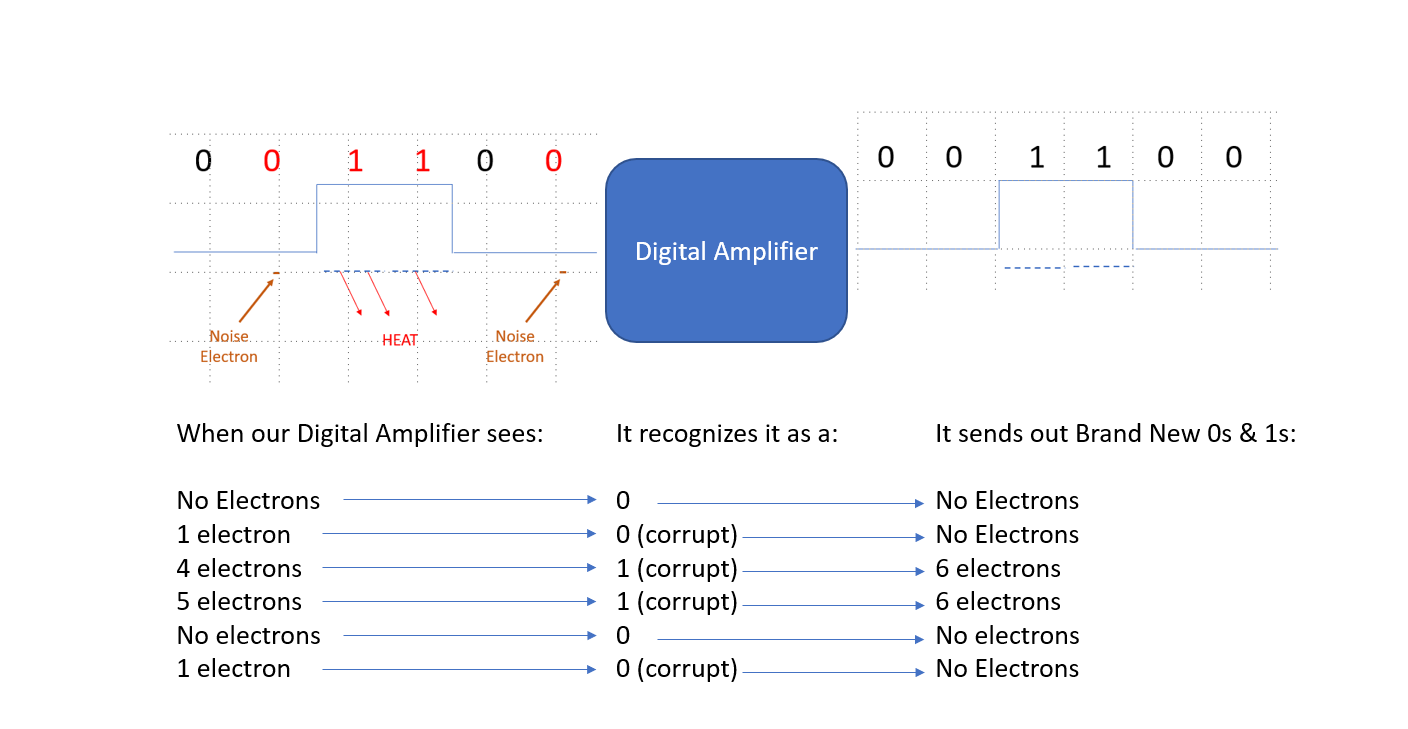
1. Accuracy and Precision: Digital technology uses binary code to represent data like shown in the image below. This makes it super precise and accurate. Unlike analog signals, which can get all messed up over time and distance, digital signals can be easily fixed and restored to their original state.
2. Error Correction: One of the coolest things about digital tech is its ability to correct errors. Imagine you’re listening to your favorite song, but there’s some annoying static noise. With digital technology, a digital amplifier can clean up that noise and make the music sound perfect again.
3. Storage and Retrieval: Digital data can be stored and retrieved way more efficiently than analog data. Think about all the photos, videos, and music you have on your phone or computer. Digital storage devices, like hard drives and SSDs, can hold tons of data in a tiny space. Plus, you can easily copy, back up, and transfer digital data without losing any quality.
4. Versatility: Digital technology is super versatile and can be used in so many different fields. Communication allows us to send messages and make video calls instantly. In business, it helps manage and analyze data efficiently. In education, it gives us easy access to information and interactive learning tools.
5. Integration with Modern Devices: Digital technology works seamlessly with modern devices like computers, smartphones, and tablets. This integration allows for the development of awesome apps and services that make our lives easier and more fun. From social media and online shopping to virtual reality and AI, digital tech is everywhere, making our world a better place.
Conclusion
Digital technology has largely replaced analog technology due to its accuracy, error-correction capabilities, efficient storage, versatility, and seamless integration with modern devices. These advantages make digital technology an essential part of our everyday lives, enabling us to access information, communicate, and perform tasks more efficiently and effectively.
From Copilot
Prompt: Why has digital technology replaced analog technology?
Response:
Digital technology has become the standard in many fields, replacing analog technology due to its numerous advantages. Digital tech uses binary code, making it super precise and accurate, unlike analog signals that can degrade over time. It also has the ability to correct errors, ensuring data remains intact. Digital data can be stored and retrieved efficiently, allowing for easy copying, backing up, and transferring without quality loss. Its versatility means it can be used in communication, business, and education, providing easy access to information and interactive tools. Additionally, digital technology integrates seamlessly with modern devices like computers and smartphones, enabling the development of advanced applications and services that enhance our daily lives. These advantages make digital technology an essential part of our everyday lives, helping us access information, communicate, and perform tasks more efficiently and effectively.