
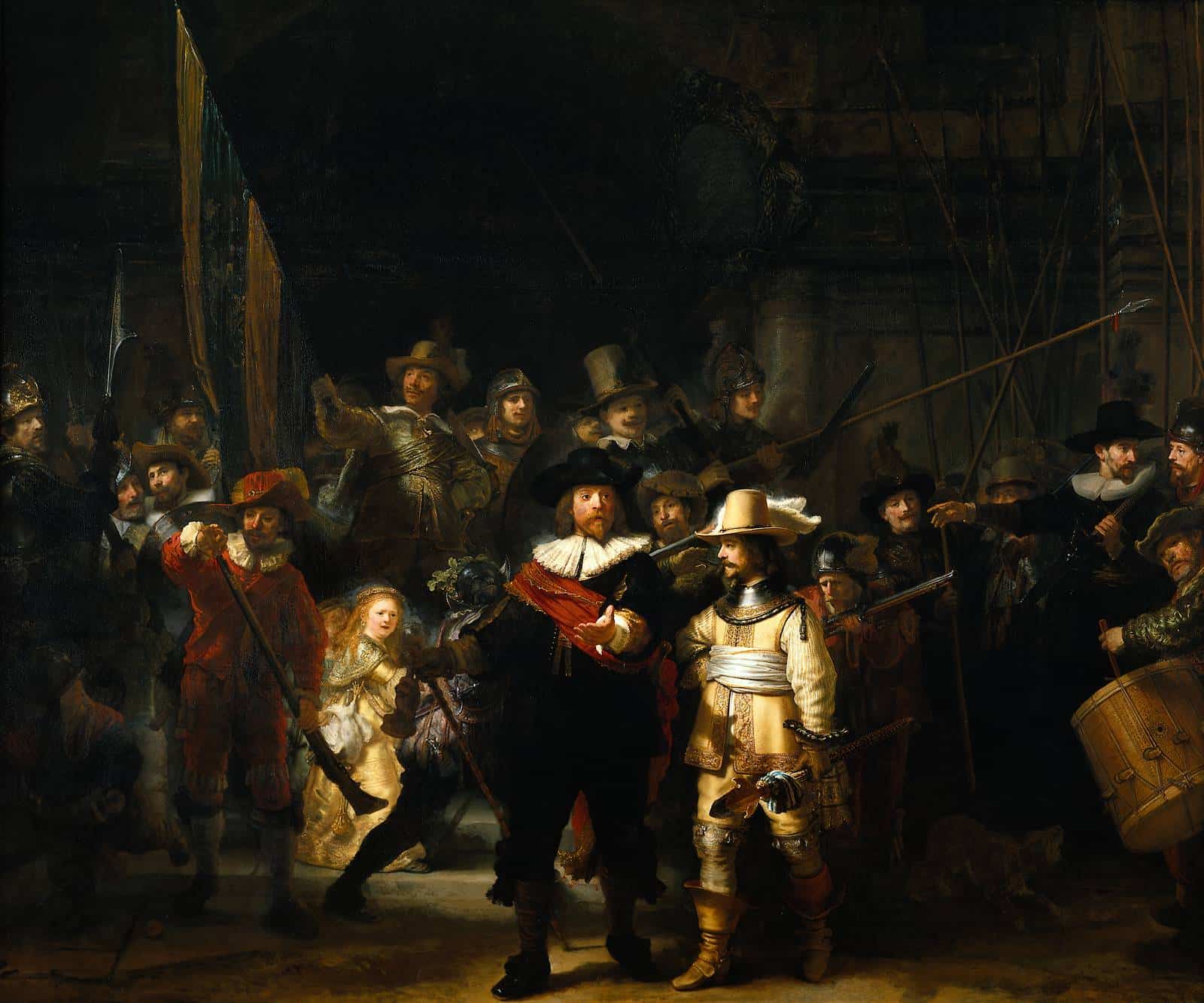
Analog refers to continuous signals or data that can take on any value within a given range. Imagine standing in front of Rembrandt’s “The Night Watch.” The painting is a masterpiece of analog creation. Each brushstroke is unique, with an infinite variety of colors and shades. The pigments blend seamlessly, creating a continuous spectrum of hues that bring the scene to life. There are no discrete steps or limits to the number of colors that can be used. This infinite range of possibilities is what makes the painting analog.
In the digital realm, the painting would be converted into a series of pixels, each with a specific color value. These pixels are arranged in a grid, and each pixel can only display a limited number of colors, depending on the resolution and color depth of the digital image. The continuous range of colors in the original painting is approximated by a finite set of discrete color values. This transformation from continuous to discrete is the essence of digital.
From Copilot
Prompt: A painting like Rembrandt’s “The Night Watch” is analog because it has an unlimited amount of paint combinations used. Use this example and explain analog vs digital.
Response:
Analog
Analog refers to continuous signals or data that can take on any value within a given range. In the context of “The Night Watch,” the painting is analog because it consists of an infinite variety of colors and shades. Each brushstroke can have a unique combination of pigments, creating a seamless and continuous spectrum of colors. There are no discrete steps or limits to the number of colors that can be used, making the painting a perfect example of an analog creation.
Digital
Digital, on the other hand, refers to discrete signals or data that are represented in binary form (0s and 1s). Digital data is made up of distinct units or steps. If “The Night Watch” were to be digitized, it would be converted into a series of pixels, each with a specific color value. These pixels are arranged in a grid, and each pixel can only display a limited number of colors, depending on the resolution and color depth of the digital image. This means that the continuous range of colors in the original painting is approximated by a finite set of discrete color values.
Key Differences
Continuity vs. Discreteness: Analog is continuous, while digital is discrete.
Range of Values: Analog can have an infinite range of values, whereas digital has a finite set of values.
Representation: Analog is represented by continuous signals, while digital is represented by binary code.
In summary, “The Night Watch” as an analog painting has an unlimited combination of colors and shades, while a digital version of the painting would be made up of discrete pixels with specific color values. This illustrates the fundamental difference between analog and digital.
Fact Check: Digital doesn’t only refer to data that is represented in binary form (0s and 1s).