
In my recent class, we watched a fascinating YouTube video titled “The Invention of the Telegraph.” This video delved into the history and impact of the telegraph, a groundbreaking invention that revolutionized communication in the 19th century. Here are some key takeaways from the video and my reflections on what I learned.
The Basics of Telegraphy
The telegraph was a point-to-point text messaging system that allowed messages to be sent from one device to another. It operated through a simple mechanism: a little switch that sent beeps, known as Morse code. Each beep represented a letter or number, and only one message could be sent at a time. This system was a significant leap from previous methods of communication, such as the “message in a bottle,” which was analog and could have many different styles.
The Role of the Electromagnet
A crucial component of the telegraph was the electromagnet. This device consisted of a piece of iron with wire wrapped around it. When a message was sent, the electromagnet would become magnetized, allowing the message to be transmitted. This technology was simple yet effective, demonstrating that great ideas don’t have to be complicated.
Human Factors and Adoption
One interesting point discussed in the video was the importance of human factors in the adoption of new technology. If a technology is too difficult to use, it won’t be widely adopted. In the case of the telegraph, Morse code was designed to train people rather than machines, making it easier for operators to learn and use the system.
The Impact of the Telegraph on Society
The telegraph had a profound impact on society. Before the Civil War, there were only 300 miles of telegraph wire in the United States. By the end of the war, this number had increased to 1,500 miles. The first telegram was sent in 1838, and by 1844, the first famous message had traveled 71 kilometers. By 1861, telegraph wires spanned the entire country, and in 1858, the first cable capable of sending messages across the ocean was laid.
Speed of Communication
The video also highlighted the speed of communication before the telegraph. In 1852, it took 12 days for a message to travel from New York to Turkey, 33 days to India (east coast), 44 days to India (west coast), 45 days to Singapore, 57 days to China, and 73 days to Australia. The telegraph drastically reduced these times, making communication faster and more efficient.
Technological Advancements and Their Effects
Technological advancements, such as the telegraph, had a significant effect on society. They enabled faster communication, which was independent of the medium used. Messages could be sent through light, handwritten notes, or wires. The leading telegraph company at the time was Western Union, which played a pivotal role in the widespread adoption of this technology.
Conclusion
The invention of the telegraph was a monumental achievement that transformed the way people communicated. It demonstrated that even simple ideas could have a profound impact on society. Watching the video and learning about the history of the telegraph has given me a deeper appreciation for the technological advancements we often take for granted today.

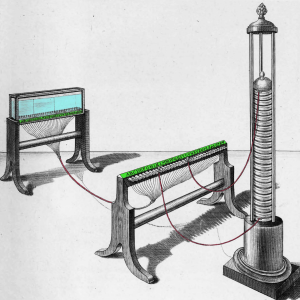
From Copilot
Prompt: What is some information about the telegraph. Write me a paragraph about it.
Response:
The telegraph, developed in the 1830s and 1840s by Samuel Morse and other inventors, revolutionized long-distance communication by transmitting electrical signals over a wire laid between stations. This system used Morse code, a series of dots and dashes representing letters and numbers, to send messages quickly and efficiently. The first successful telegraph message was sent by Morse in 1844 from Washington, D.C., to Baltimore, Maryland. By 1866, a telegraph line had been laid across the Atlantic Ocean, connecting the United States to Europe. The telegraph remained the principal means of rapid long-distance communication until the invention of the telephone in 1876. Its development marked a significant milestone in the history of communication, paving the way for future technological advancements.